Choosing an MCS-certified installer guarantees a high-quality renewable energy system. MCS certification signifies adherence to stringent performance and safety standards, verifying both equipment quality and installer competence. This rigorous vetting process ensures installers demonstrate proven compliance with MCS standards, providing assurance in their technical expertise and the reliability of your installation.
Battery Storage Solutions for Developers, New Builds and Self-build projects
Smarter Energy, Lower Costs, Higher property Value
What Battery Storage can do for developments

Unlock Greater Value from Solar PV
Enables self-builders and developers to use more solar generation, rather than exporting surplus electricity. This boosts self‑consumption, cuts grid reliance, and strengthens the business case—delivering lower running costs, improved EPCs, and enhanced long‑term asset value.

Future Proof Developments and De Risk Regulation
As regulations tighten and tariffs become more complex, battery storage provides flexibility and resilience. It supports load‑shifting, peak‑shaving, EV charging readiness, and smart tariffs—reducing retrofit risk and keeping buildings compliant, competitive, and attractive long‑term.

Increased Market Appeal and Occupier Confidence
Battery‑enabled developments offer lower bills, energy independence, and greater resilience. For developers, this improves sales and lettability; for self‑builders, it delivers control, comfort, and confidence that the property is genuinely future‑ready and valuable.
Battery Storage System Choices: What Developers Need to Know
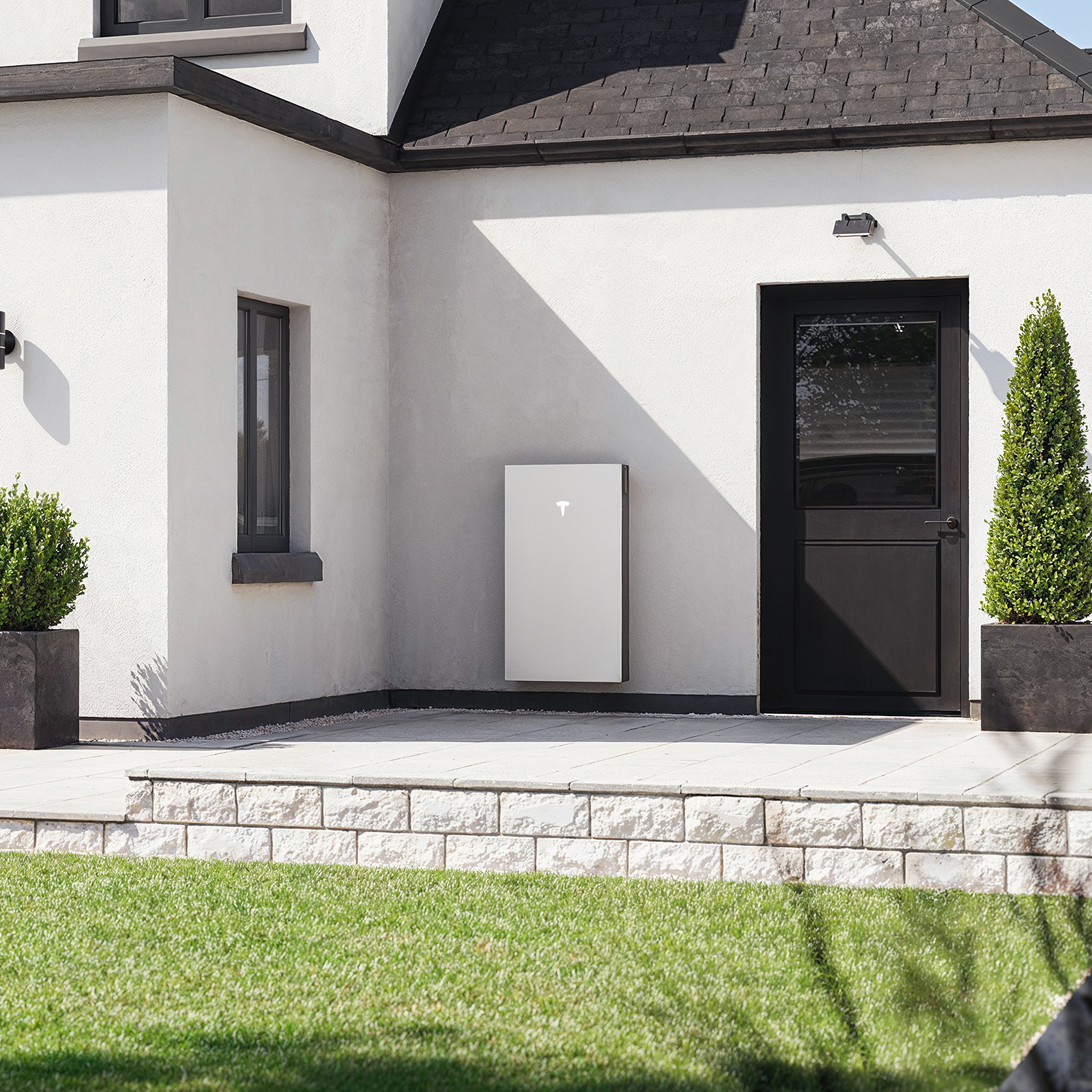
AC Coupled Battery System
- The battery connects on the AC side of the electrical system, operating independently of the solar inverter
- Provides a highly flexible and modular solution, ideal for phased construction or evolving energy strategies
- Well suited to retrofit projects or staged delivery, where solar and battery installation are separated
- Enables straightforward future battery capacity expansion or technology upgrades with minimal disruption
- Slightly lower efficiency, but offers reduced long‑term design risk and greater adaptability
.
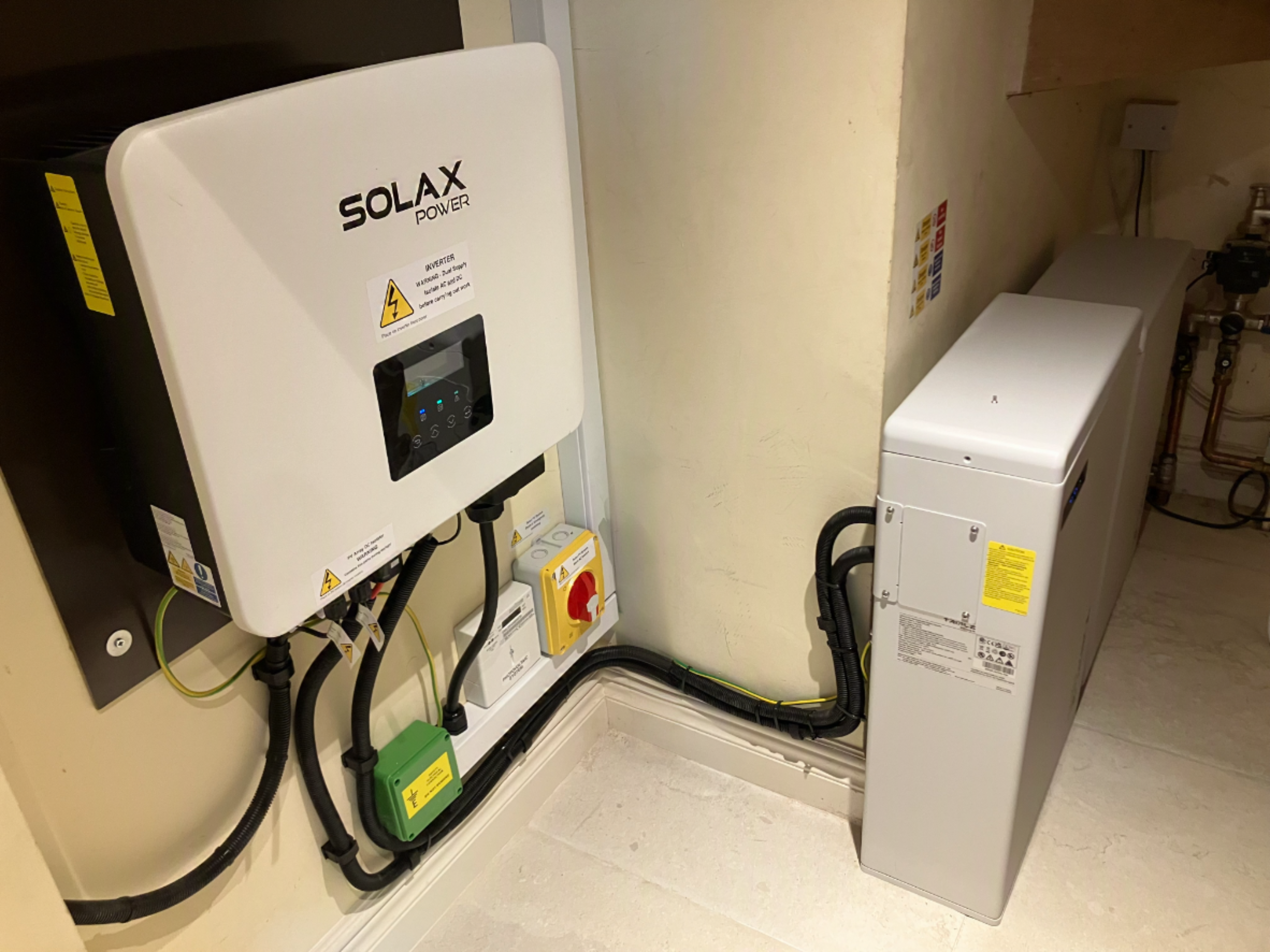
DC Coupled Battery System
- The battery connects on the DC side of the system, directly integrating with the solar PV array before inversion
- Delivers higher overall system efficiency by avoiding multiple DC‑to‑AC and AC‑to‑DC conversion steps
- Maximises on‑site solar self‑consumption, supporting stronger EPC scores and lower operational energy demand
- Particularly well suited to new‑build developments where solar and storage are designed together from the outset
- Offers limited flexibility for later expansion, meaning early coordination and correct sizing are essential
Frequently Asked Questions (FAQ's)
Why should developers include battery storage in new developments?
Battery storage increases the value of on‑site generation by capturing surplus energy and using it when demand is higher. This improves EPC performance, reduces reliance on the grid, and helps future‑proof developments against rising energy costs and tighter regulation.
Does battery storage improve development viability?
Yes. By increasing self‑consumption of solar PV and reducing peak grid demand, battery storage strengthens whole‑life cost assessments. For developers, this means lower operational costs, stronger EPC ratings, and improved asset value, supporting sales, lettability, and investment returns.
Is battery storage only relevant for large developments?
No. Battery storage can be effectively scaled for small self‑builds, single apartment blocks, and large multi‑unit schemes. The key is correct sizing and system design to match the building’s load and energy strategy.
Does battery storage help with planning and compliance?
Increasingly, yes. Battery storage supports planning objectives around energy efficiency, grid resilience, and decarbonisation. Including storage at design stage can help strengthen planning submissions and reduce the risk of future retrofit requirements.
When is the best time to include battery storage in a project?
The earlier, the better. Designing battery storage in from the outset allows developers to optimise system architecture, reduce installation costs, and avoid compromises later—delivering better technical and financial outcomes than post‑completion add‑ons.
Can battery storage be added later if budgets are tight?
Yes, but early design makes a big difference. Allowing physical space, cable routes, and capacity in the electrical design enables straightforward future installation, protecting flexibility without committing capital immediately.
How does battery storage support future proofing?
Battery storage prepares developments for smart tariffs, EV charging growth, grid constraints, and future energy regulation. It reduces exposure to energy price volatility and ensures buildings remain attractive and compliant over the long term.
Does battery storage add complexity or risk to a build programme?
When properly engineered, battery systems are proven and low‑risk. Early coordination ensures smooth integration with electrical systems, with minimal impact on construction programmes and well‑understood commissioning requirements.
Is battery storage attractive to buyers and occupiers?
Absolutely. Lower energy bills, improved resilience, and energy independence are tangible benefits that improve market appeal. For developers, battery storage helps differentiate schemes and move beyond compliance‑led sustainability claims.
Why involve an engineering partner rather than just installing a battery?
Battery storage performance depends entirely on correct system design, control strategy, and integration with solar, EV charging, and building demand. An engineering‑led approach ensures battery storage genuinely delivers value, rather than becoming an under‑performing add‑on.
Smart Energy Decisions Start with Engineering Expertise
Developers and self‑builders only get one opportunity to design energy systems properly, and the decisions made early have long‑term consequences for compliance, performance, and value. Green Systems Engineering provides clear, honest, engineering‑led advice that helps projects succeed from concept through delivery. We specialise in designing buildable, future‑ready energy systems—from solar PV and battery storage to heat pumps and integrated solutions—that strengthen planning outcomes, improve EPC performance, and protect long‑term asset value. Our approach is practical, site‑specific, and driven by real‑world performance, ensuring systems deliver what they promise once buildings are occupied—not just at handover.
Contact Green Systems Engineering today to discuss your project and see how early engineering input can de risk planning, improve viability, and deliver energy systems you can rely on from day one.